Listening to Ayahuasca
New Hope for Depression, Addiction, PTSD, and Anxiety
Our Review
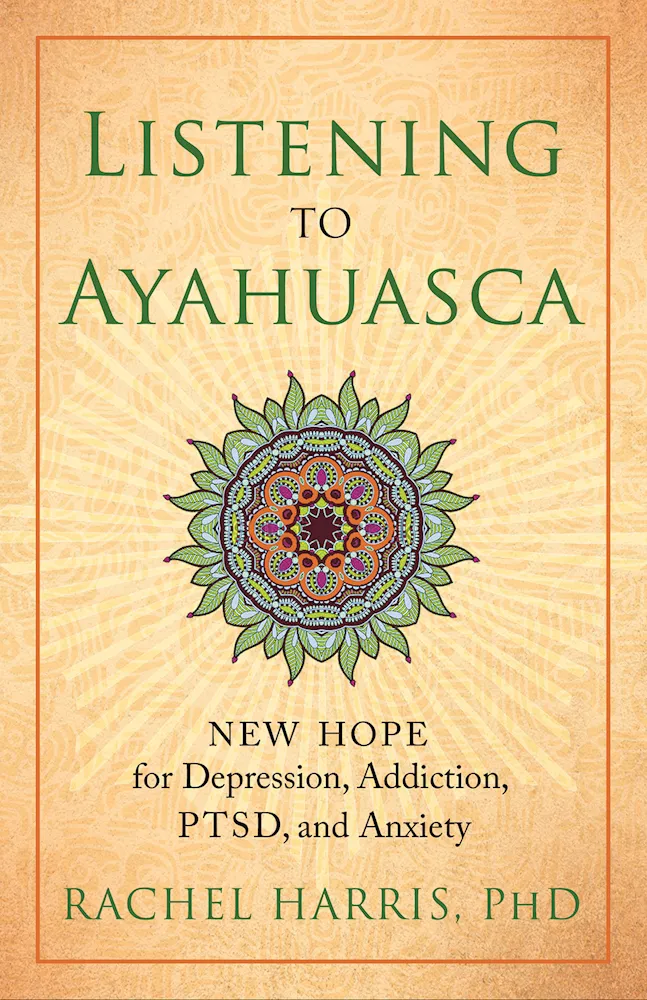
Listening to Ayahuasca draws on Harris's three-year research study — the largest survey of ayahuasca use in North America at the time of publication — along with her 35 years of clinical psychology experience and her own personal ceremonies. The book covers the history and cultural context of ayahuasca, the subjective experience of ceremony, therapeutic applications, risks and contraindications, and practical guidance for preparation and integration. James Fadiman endorsed it without reservation, calling it an "ayahuasca book I can finally recommend."
The book's unique strength is its integration framework. Harris, as both a researcher and a clinician who has personally sat in ceremony, writes with rare authority about what happens after the experience — how to process challenging visions, how to bring insights into daily life, and how to work with a therapist who may not understand psychedelic experiences. The limitation is that it's narrowly focused on ayahuasca and may feel less relevant to readers primarily interested in psilocybin or LSD.
For microdosing practitioners, this book fills a critical gap: integration. Many microdosers experience subtle shifts in perspective, emotional processing, and self-awareness that benefit from the same integration practices Harris describes for full-dose ayahuasca work. Her framework for intention-setting, journaling, and working with a therapist translates directly to microdosing practice — and her emphasis on the therapeutic relationship is relevant to anyone using psychedelics for personal growth.
Key Takeaways
- ✓ Integration is where the real work happens — the ceremonial experience is only the beginning; lasting change requires conscious effort to bring insights into daily life patterns and relationships
- ✓ Ayahuasca users in Harris's study reported lasting reductions in depression and anxiety, improvements in self-awareness, and profound shifts in life priorities — these benefits persisted months after ceremonies
- ✓ Contraindications are real and serious — ayahuasca interacts dangerously with SSRIs, MAOIs, and certain other medications; Harris provides a clear safety framework
- ✓ Not all facilitators or retreat centers are equally competent or ethical — the book provides guidance on evaluating ceremony leaders and recognizing red flags
- ✓ The "relationship with the plant" framework that Harris describes — treating ayahuasca as a teacher rather than just a chemical — resonates with many microdosers who develop an intentional, ongoing relationship with their substance
Who Should Read This
Anyone interested in ayahuasca specifically, or in the integration process more generally. Especially valuable for people who have had psychedelic experiences and want help making sense of them, and for therapists working with clients who use or are curious about plant medicines.
Available Editions
Related Content
Related Protocols
Related Substances
Related Terms
Important Legal Notice
⚠️ Personal Responsibility
You use this application entirely at your own risk and responsibility. MicrodosingDiary is only a tool for recording personal experiences.
🚫 Not a Medical Service
This application IS NOT a medical tool, does not provide medical advice, does not diagnose or treat any conditions. Always consult a qualified physician.
⚖️ Legislation and Laws
Many substances used for microdosing are illegal in many countries. Users are fully responsible for complying with local laws. The application does not support or promote illegal activity.
❌ No Guarantees
We provide no guarantees regarding results, safety or efficacy of microdosing. All information is for informational purposes only.
🔞 Age Restriction
Application is intended only for persons over 18 years of age. By using the application you confirm that you are an adult.
🔒 Data Privacy
Your diary entries are private and encrypted. The application is for personal use. Public-page analytics is described in Privacy and Terms.
By using this application you accept all the above risks and waive any claims against the application operator.