Entheogen
What is an entheogen?
The term entheogen (from Greek entheos — "god within" — and genesthai — "to generate") was coined in 1979 by ethnobotanist R. Gordon Wasson and colleagues as an alternative to the more clinical or recreational connotations of words like "hallucinogen" or "psychedelic." It refers specifically to substances used in a sacred or spiritual context.
Historical and contemporary entheogens include:
- Psilocybin mushrooms — used by Mazatec people in Mexico for centuries in healing ceremonies
- Ayahuasca — a DMT-containing brew used by indigenous Amazonian peoples for spiritual and medicinal purposes
- Peyote (mescaline) — sacred sacrament of the Native American Church and indigenous Mexican traditions
- Soma — an unidentified entheogen referenced in the Rigveda (ancient Hindu text)
- Cannabis — used sacramentally in various Hindu, Rastafarian, and other traditions
- Iboga/Ibogaine — used in Bwiti spiritual practice in Central Africa
Why it matters for microdosing
The concept of entheogens provides important cultural and philosophical context:
- Historical depth — psychedelic use is not a modern phenomenon; humans have used these substances for thousands of years
- Respect and reverence — the entheogenic perspective encourages treating these substances with respect rather than as mere tools or recreational drugs
- Intentionality — entheogenic traditions emphasize intention, preparation, and integration — the same principles that make microdosing effective
- Cultural sensitivity — understanding indigenous use helps avoid cultural appropriation and promotes respectful engagement with these substances
- Beyond the material — the entheogenic lens reminds microdosers that these substances have dimensions beyond the pharmacological
What to watch out for
- Cultural appropriation — adopting indigenous practices without understanding or respecting their cultural context
- Romantization — idealizing traditional use while ignoring the specific cultural frameworks that made it meaningful
- Spiritual bypassing — using spiritual language to avoid practical self-work and accountability
- Terminology precision — not all psychedelic use is entheogenic; the term specifically implies a sacred context
- Legal considerations — some entheogenic practices have legal protection for specific religious groups (e.g., peyote for the Native American Church) but not for general use
Related Terms
Recommended Books
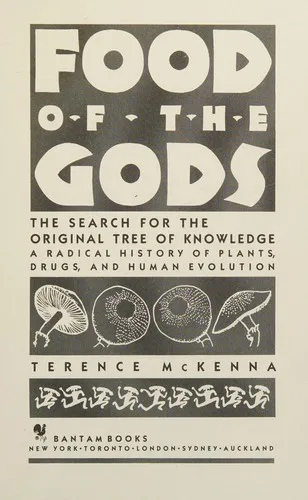
Food of the Gods
Terence McKenna (1992)
McKenna presents a sweeping argument that psychoactive plants — especially psilocybin mushrooms — played a pivotal role in human cognitive evolution, language development, and cultural formation. A provocative blend of ethnobotany, anthropology, and cultural history.
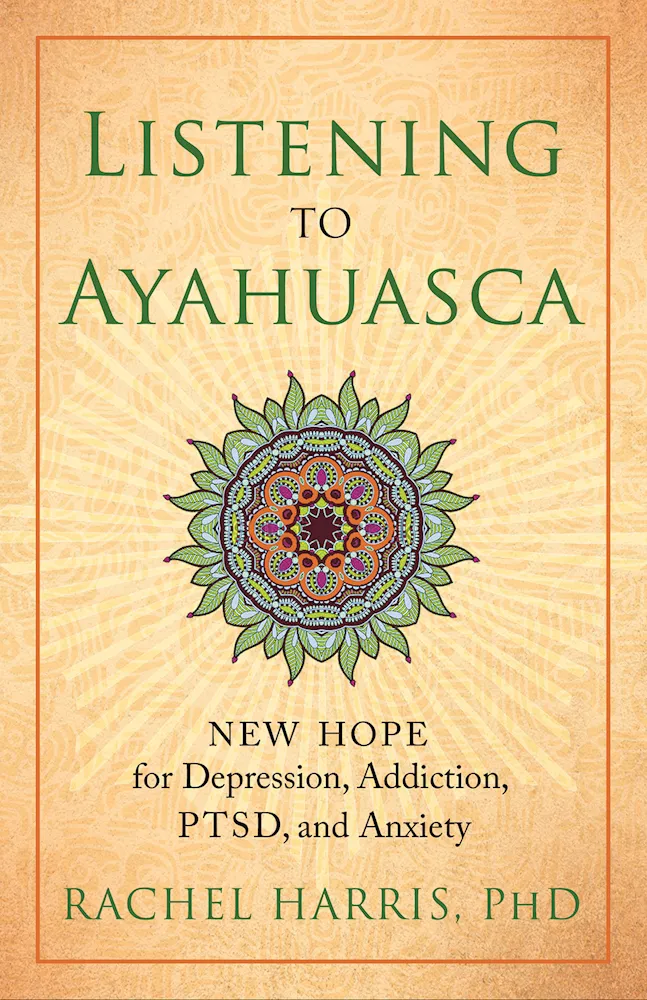
Listening to Ayahuasca
Rachel Harris (2017)
Psychologist Rachel Harris presents the findings of the largest study of ayahuasca use in North America, combined with her own experiences and clinical perspective. The book explores ayahuasca's therapeutic potential for depression, addiction, PTSD, and anxiety while providing practical guidance for those considering the experience, with a strong focus on integration.
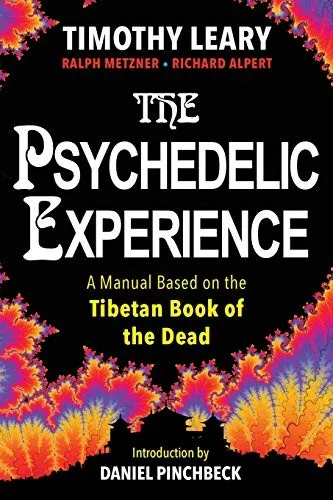
The Psychedelic Experience
Timothy Leary, Ralph Metzner, Richard Alpert (1964)
The foundational manual for navigating psychedelic experiences, reinterpreting the Tibetan Book of the Dead as a framework for ego dissolution, bardo states, and re-entry during LSD and psilocybin sessions. Written by the three Harvard researchers who launched the modern psychedelic movement, it established the concepts of preparation, set and setting, and guided sessions that remain central to all psychedelic practice today.
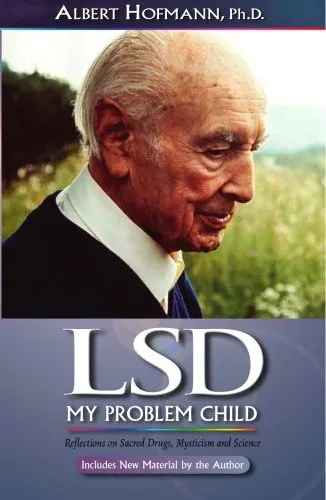
LSD: My Problem Child
Albert Hofmann (1979)
The firsthand account by the chemist who accidentally discovered LSD's psychoactive properties in 1943 — from the legendary "Bicycle Day" first trip to decades of promising psychiatric research and ultimate prohibition. Hofmann also documents his isolation of psilocybin from Mexican sacred mushrooms and his correspondence with Huxley, Leary, Wasson, and Jünger.
Cleansing the Doors of Perception
Huston Smith (2000)
The definitive scholarly treatment of whether psychedelic experiences qualify as authentically religious, written by the 20th century's foremost authority on comparative religion. Drawing on his personal participation in the 1962 Good Friday Experiment, his friendship with Aldous Huxley, and four decades of studying the world's spiritual traditions, Smith concludes that entheogens can trigger genuine mystical experiences but cannot by themselves produce religious lives — integration is where the real work begins.
The Brotherhood of the Screaming Abyss
Dennis McKenna (2012)
Dennis McKenna's memoir of growing up with his brother Terence McKenna and their legendary 1971 expedition to La Chorrera, Colombia, where experiments with psilocybin mushrooms and ayahuasca produced experiences so extreme they challenged both brothers' understanding of reality. Equal parts love story, adventure narrative, and philosophical meditation on the nature of consciousness.