The Psychedelic Renaissance
Reassessing the Role of Psychedelic Drugs in 21st Century Psychiatry and Society
Our Review
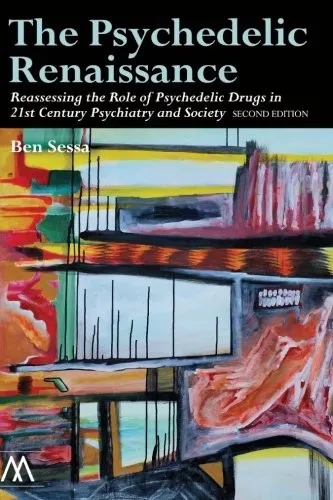
The Psychedelic Renaissance is written by a working psychiatrist who has conducted clinical psychedelic research at Imperial College London, the University of Bristol, and Cardiff University. Ben Sessa covers the history of psychedelic use from prehistory to the 2010s, the pharmacology of every major psychedelic substance, and the clinical evidence for their use in treating PTSD, depression, addiction, OCD, and anxiety. The book is endorsed by David Nutt, Rick Doblin, Robin Carhart-Harris, Amanda Feilding, and Ralph Metzner — essentially the entire leadership of the psychedelic research field.
What distinguishes this from Pollan's How to Change Your Mind (already in the database) is the clinical depth and insider perspective. Sessa is not a journalist visiting the field — he is a practitioner who has administered MDMA to patients in clinical trials. This gives the book an authority that journalist accounts cannot match. The 2017 second edition significantly expanded the clinical trial coverage. The main limitations are that the writing style is more clinical than literary, and the UK-centric perspective may feel less accessible to some readers.
For microdosing practitioners, this book provides the rigorous pharmacological and neuroscientific foundation for understanding how psychedelics work in the brain. Sessa covers 5-HT2A receptor pharmacology, the default mode network, neuroplasticity, and dose-response relationships — the exact mechanisms that microdosing researchers are investigating. Understanding these systems helps microdosers move beyond anecdotal reports to a scientific understanding of what they are doing.
Key Takeaways
- ✓ Psychedelics were used successfully in over 40,000 patients in clinical settings before prohibition — the current research renaissance is a return to established medicine, not a new experiment
- ✓ MDMA-assisted psychotherapy for PTSD has produced effect sizes larger than any existing pharmaceutical treatment — the evidence base is now strong enough for regulatory approval processes
- ✓ The pharmacology of each psychedelic class (tryptamines, phenethylamines, empathogens) produces distinct subjective and therapeutic effects — understanding these differences matters for both full-dose therapy and microdosing
- ✓ The UK's drug classification system (and by extension, much of the world's) is not based on scientific evidence of harm — Sessa documents how political decisions have blocked beneficial research for decades
- ✓ Set, setting, and therapeutic relationship are as important as the drug itself in determining clinical outcomes — this applies whether the dose is macroscopic or microscopic
Who Should Read This
Readers who want a clinician's perspective on the entire landscape of psychedelic medicine. Ideal for those who found Pollan's How to Change Your Mind compelling and want deeper pharmacological and clinical detail, or for healthcare professionals curious about the evidence base for psychedelic-assisted therapy.
Available Editions
Related Content
Related Substances
Related Terms
Important Legal Notice
⚠️ Personal Responsibility
You use this application entirely at your own risk and responsibility. MicrodosingDiary is only a tool for recording personal experiences.
🚫 Not a Medical Service
This application IS NOT a medical tool, does not provide medical advice, does not diagnose or treat any conditions. Always consult a qualified physician.
⚖️ Legislation and Laws
Many substances used for microdosing are illegal in many countries. Users are fully responsible for complying with local laws. The application does not support or promote illegal activity.
❌ No Guarantees
We provide no guarantees regarding results, safety or efficacy of microdosing. All information is for informational purposes only.
🔞 Age Restriction
Application is intended only for persons over 18 years of age. By using the application you confirm that you are an adult.
🔒 Data Privacy
Your diary entries are private and encrypted. The application is for personal use. Public-page analytics is described in Privacy and Terms.
By using this application you accept all the above risks and waive any claims against the application operator.