Decriminalization
What is decriminalization?
Decriminalization is a legal policy shift that removes or reduces criminal penalties for certain drug-related activities, typically personal possession and use. It is distinct from legalization:
- Decriminalization — the activity is still technically prohibited, but penalties are reduced (e.g., from criminal charges to civil fines) or deprioritized by law enforcement
- Legalization — the activity is fully permitted under law, often with a regulated framework
- Deprioritization — a softer approach where law enforcement is directed to make enforcement of certain drug laws their lowest priority
Decriminalization focuses on reducing harm to users by removing the devastating consequences of criminal records, incarceration, and social stigma, while not necessarily creating a legal supply chain.
Why it matters for microdosing
The legal status of psychedelic substances directly affects microdosing practice:
- Legal awareness — microdosers need to understand the laws in their jurisdiction to make informed decisions about risk
- Shifting landscape — an increasing number of jurisdictions are decriminalizing or deprioritizing psychedelics, changing the risk profile
- Research access — decriminalization often precedes expanded research funding and clinical access
- Community openness — in decriminalized areas, microdosing communities can operate more openly, improving information sharing and harm reduction
Notable decriminalization developments:
- Oregon (2020) — Measure 110 decriminalized personal possession of all drugs; Measure 109 created a framework for psilocybin therapy
- Colorado (2022) — Proposition 122 decriminalized psilocybin and created a regulated access framework
- Several US cities — Denver, Oakland, Santa Cruz, Washington D.C., and others have deprioritized enforcement
- International — Portugal (2001 decriminalization of all drugs), Netherlands (psilocybin truffles legal), Jamaica, Brazil
What to watch out for
- Decriminalization ≠ legal — even in decriminalized jurisdictions, possession may still result in fines or confiscation
- Jurisdiction specifics — laws vary enormously; what's decriminalized in one city may carry serious penalties in the next state or country
- Supply chain — decriminalization of possession rarely addresses the supply side; obtaining substances may still carry legal risk
- Workplace policies — employer drug testing policies may not change even when laws do
- Travel risk — crossing jurisdictional boundaries with substances remains illegal in most cases
Related Terms
Recommended Books
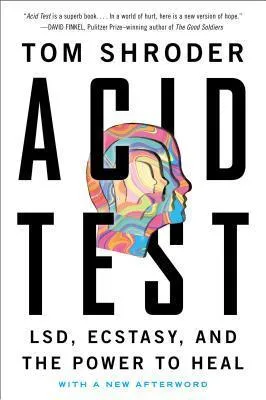
Acid Test
Tom Shroder (2014)
Award-winning Washington Post journalist Tom Shroder tells the story of the psychedelic renaissance through three interconnected lives: Rick Doblin, founder of MAPS; Michael Mithoefer, the psychiatrist pioneering MDMA-assisted therapy; and Nick Blackston, a Marine suffering from severe PTSD. The book traces the arc from LSD's discovery through prohibition to the modern clinical trials that are bringing psychedelics back into medicine.
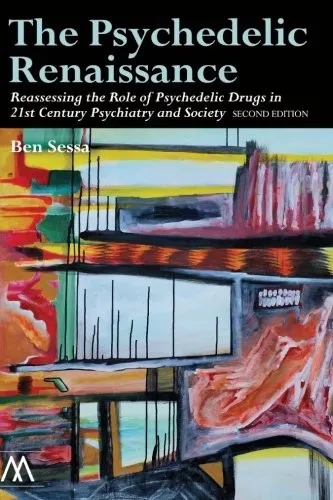
The Psychedelic Renaissance
Ben Sessa (2017)
A psychiatrist and clinical researcher who has personally conducted MDMA and psilocybin therapy trials provides a thorough overview of psychedelic science, history, pharmacology, and clinical potential. Extensively revised for the 2017 second edition, the book surveys every major psychedelic substance and its evidence base for treating psychiatric disorders.
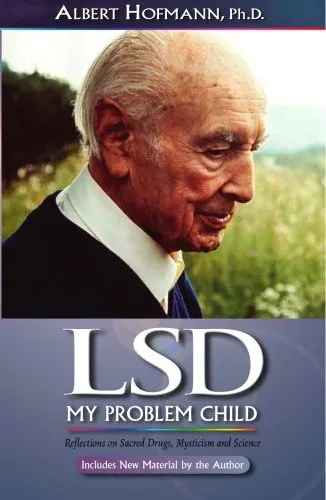
LSD: My Problem Child
Albert Hofmann (1979)
The firsthand account by the chemist who accidentally discovered LSD's psychoactive properties in 1943 — from the legendary "Bicycle Day" first trip to decades of promising psychiatric research and ultimate prohibition. Hofmann also documents his isolation of psilocybin from Mexican sacred mushrooms and his correspondence with Huxley, Leary, Wasson, and Jünger.

Acid Dreams
Martin A. Lee, Bruce Shlain (1985)
The definitive social history of LSD, tracing the substance from its synthesis by Albert Hofmann in 1938 through CIA mind-control experiments (MK-Ultra), the Harvard Psilocybin Project, the counterculture explosion of the 1960s, and the backlash that led to prohibition. Drawn partly from declassified government files, the book reveals how LSD shaped — and was shaped by — some of the most turbulent decades of American history.
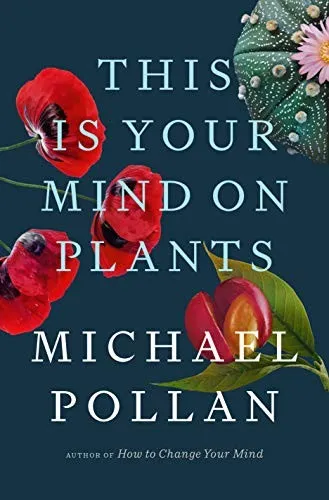
This Is Your Mind on Plants
Michael Pollan (2021)
Michael Pollan's follow-up to How to Change Your Mind examines three plant drugs — opium, caffeine and mescaline — and asks why one is illegal, one is in every kitchen and one is a protected sacrament. Part memoir, part reportage, part cultural history, it is an essay on how societies decide which changes in consciousness are permitted.