Default Mode Network (DMN)
What is the default mode network?
The default mode network is a set of interconnected brain regions that become most active when you're not focused on the external world — when you're daydreaming, thinking about yourself, remembering the past, imagining the future, or considering other people's perspectives.
It was discovered accidentally in the late 1990s when researchers noticed that certain brain regions were consistently more active during rest than during focused tasks. This was the opposite of what they expected — these regions actually "turn on" when you stop doing things.
Key DMN regions:
- Medial prefrontal cortex — self-referential thinking, social cognition
- Posterior cingulate cortex — autobiographical memory, self-reflection
- Angular gyrus — semantic processing, attention
- Hippocampus — memory formation and retrieval
- Lateral temporal cortex — conceptual processing
The DMN and the sense of self
The DMN is often described as the brain's "narrative self" network — the neural machinery that constructs and maintains your ongoing story of who you are:
- Your personal history and identity
- Your self-image and self-evaluation
- Your mental models of other people
- Your plans and worries about the future
- Your rumination about the past
When the DMN is hyperactive or overly rigid, this "story of me" can become a prison:
- Rumination — the same negative thoughts cycling endlessly
- Rigid self-concept — inability to see yourself differently
- Excessive self-focus — over-identification with the "narrator"
- Anxiety — worry loops about future scenarios
- Depression — trapped in negative self-referential patterns
Why the DMN matters for microdosing
Psychedelics reduce DMN activity
One of the most consistent findings in psychedelic neuroscience is that psychedelics decrease activity and connectivity within the DMN. At macrodose levels, this produces the experience of ego dissolution — the temporary loss of the usual sense of self.
At microdose levels, the effect is far more subtle but may include:
- Reduced rumination — less repetitive negative self-talk
- Looser self-concept — more flexibility in how you see yourself
- Less attachment to the "story" — greater present-moment awareness
- Reduced anxiety — fewer future-worry loops
- Enhanced cognitive flexibility — ability to shift perspectives more easily
The "relaxed beliefs" model
Neuroscientist Robin Carhart-Harris proposed the REBUS model (Relaxed Beliefs Under Psychedelics): psychedelics relax the brain's high-level predictions and assumptions (largely maintained by the DMN), allowing more bottom-up sensory and emotional information to reach consciousness.
In everyday terms: your brain's autopilot loosens its grip, letting you see things with fresh eyes.
DMN and depression
Research has shown that depression is associated with hyperconnectivity within the DMN — the ruminative circuit is essentially overactive and stuck. By reducing DMN dominance, psychedelics may help break the ruminative cycle — one of the key proposed mechanisms for their antidepressant effects.
DMN in the context of brain networks
The brain has several major networks that dynamically compete and cooperate:
| Network | Function | Psychedelic effect |
|---|---|---|
| Default mode network | Self-reflection, rumination | Decreased activity |
| Task-positive network | Focused attention, problem-solving | Increased flexibility |
| Salience network | Detecting important stimuli | Altered filtering |
Psychedelics shift the balance away from DMN dominance and toward more fluid communication between all networks. This may explain the common experience of seeing connections between seemingly unrelated things.
Practical implications for microdosers
Signs that DMN modulation might be happening:
- Less time spent in repetitive thought loops
- More presence and engagement with the current moment
- Greater ability to step back from your own "story"
- Enhanced appreciation of novelty and beauty
- Reduced self-criticism
- More creative and flexible thinking
How to support DMN modulation:
- Mindfulness meditation — independently reduces DMN activity
- Novel experiences — engaging the task-positive network
- Nature immersion — shifts attention from internal narrative to external world
- Flow-state activities — bypasses DMN-driven self-monitoring
- Physical exercise — reduces DMN rumination patterns
Key research
- Raichle et al. (2001) — Landmark paper defining the default mode network
- Carhart-Harris et al. (2012) — First study showing psilocybin decreases DMN activity
- Carhart-Harris & Friston (2019) — The REBUS model explaining how psychedelics work through DMN relaxation
Related Terms
Recommended Books

Psychedelics
David Nutt (2023)
The definitive accessible guide to psychedelic science by one of the world's leading neuropsychopharmacologists. Professor David Nutt covers the pharmacology, neuroscience, and clinical evidence for LSD, psilocybin, MDMA, DMT, ayahuasca, and ketamine.
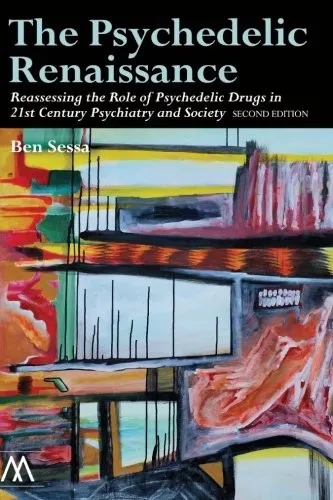
The Psychedelic Renaissance
Ben Sessa (2017)
A psychiatrist and clinical researcher who has personally conducted MDMA and psilocybin therapy trials provides a thorough overview of psychedelic science, history, pharmacology, and clinical potential. Extensively revised for the 2017 second edition, the book surveys every major psychedelic substance and its evidence base for treating psychiatric disorders.

Good Chemistry
Julie Holland (2020)
Psychiatrist and MAPS clinical researcher Julie Holland explores the neuroscience of human connection — why we need it, how modern life undermines it, and how psychedelic medicines can help restore it. The book bridges oxytocin research, attachment theory, and psychedelic pharmacology to make the case that the "chemistry of connection" is the key to both individual healing and collective wellbeing.

The Psychedelic Handbook
Rick Strassman (2022)
A comprehensive, evidence-based practical guide covering nine psychedelic substance classes — psilocybin, LSD, DMT/ayahuasca, mescaline, ketamine, MDMA, ibogaine, 5-MeO-DMT, and Salvia divinorum — written by the clinical researcher who conducted the first FDA-approved psychedelic study in a generation. Each chapter addresses pharmacology, therapeutic potential, safe use guidelines, microdosing, and recognition of adverse reactions.

The Way of the Psychonaut
Stanislav Grof (2019)
Written in his late eighties, this is Stanislav Grof's magnum opus — a comprehensive synthesis of over sixty years of consciousness research through psychedelic-assisted therapy and Holotropic Breathwork. Volume One covers maps of the psyche, the architecture of emotional disorders, perinatal matrices, spiritual emergency, and a fundamental revision of depth psychology based on non-ordinary states of consciousness.