5-HT2A Receptor
What is the 5-HT2A receptor?
The 5-HT2A receptor is a specific type of serotonin receptor found on the surface of neurons, primarily in the cerebral cortex (the brain's outer layer responsible for higher-order thinking, perception, and consciousness).
Breaking down the name:
- 5-HT = 5-hydroxytryptamine = serotonin (a neurotransmitter)
- 2A = the specific receptor subtype (one of at least 14 serotonin receptor subtypes)
The 5-HT2A receptor is the master key to understanding psychedelic pharmacology. When researchers block this receptor with an antagonist (like ketanserin), psychedelic effects are completely abolished — confirming that virtually all classical psychedelic effects flow through this single receptor target.
Why it matters for microdosing
It's the primary target
Whether you're microdosing psilocybin, LSD, mescaline, or any classical psychedelic, the 5-HT2A receptor is where the action begins. Understanding this receptor helps you understand:
- Why psychedelics work the way they do
- Why tolerance develops so rapidly
- Why certain drug interactions are dangerous
- Why dosing schedules include rest days
Tolerance mechanism
Repeated activation of 5-HT2A receptors causes the cell to internalize (pull inside) some of these receptors — a process called downregulation. Fewer surface receptors = weaker response to the same dose = tolerance. This is why:
- Tolerance develops within 1-3 days of consecutive dosing
- Rest days allow receptors to return to the surface
- Full tolerance reset takes approximately 5-7 days
The neuroplasticity connection
5-HT2A activation doesn't just produce perceptual effects — it triggers intracellular signaling cascades that promote:
- BDNF expression (brain growth factor)
- TrkB receptor activation
- mTOR pathway signaling
- Ultimately: dendritic growth and synapse formation (neuroplasticity)
This neuroplasticity pathway may be responsible for the therapeutic effects of psychedelics, potentially operating even at sub-perceptual doses.
Where 5-HT2A receptors are located
5-HT2A receptors are found throughout the brain, but are most densely concentrated in:
- Prefrontal cortex — executive function, decision-making, planning
- Visual cortex — visual processing (explains visual effects at higher doses)
- Default mode network regions — self-referential thinking, mind-wandering
- Claustrum — a thin brain structure thought to integrate information across brain regions
The distribution pattern explains the characteristic psychedelic effects: altered visual perception, disrupted self-referential thinking, enhanced connectivity between brain regions.
5-HT2A and the psychedelic experience
At microdose levels
- Subtle activation of 5-HT2A receptors
- Modest downstream signaling
- Potential neuroplasticity promotion
- Sub-threshold perceptual and cognitive effects
At macrodose levels
- Massive 5-HT2A activation
- Disruption of default mode network
- Increased connectivity between normally separate brain regions
- Altered perception, ego dissolution, mystical experiences
Drug interactions involving 5-HT2A
SSRIs (e.g., fluoxetine, sertraline)
Chronic SSRI use causes 5-HT2A downregulation, which can significantly blunt psychedelic effects. This is why many microdosers find psychedelics less effective while on SSRIs.
MAOIs
MAO inhibitors increase serotonin levels throughout the brain, which can potentiate psychedelic effects — sometimes dangerously. The combination of MAOIs with psychedelics requires extreme caution.
Lithium
Lithium interacts with serotonin signaling in ways that can cause seizures when combined with psychedelics. This is a hard contraindication — never combine.
Key research
- Vollenweider et al. (1998) — First demonstrated that ketanserin (5-HT2A antagonist) blocks psilocybin effects, confirming the receptor target
- Ly et al. (2018) — Showed that psychedelic-induced neuroplasticity is mediated by 5-HT2A → TrkB signaling
- Madsen et al. (2019) — Used PET imaging to show 5-HT2A receptor occupancy by psilocybin in humans
Related Terms
Recommended Books
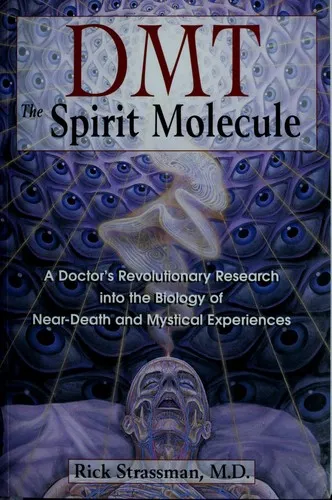
DMT: The Spirit Molecule
Rick Strassman (2001)
Rick Strassman documents the first U.S. government-approved clinical research with a psychedelic substance in over 20 years, administering approximately 400 doses of DMT to 60 volunteers at the University of New Mexico between 1990 and 1995.
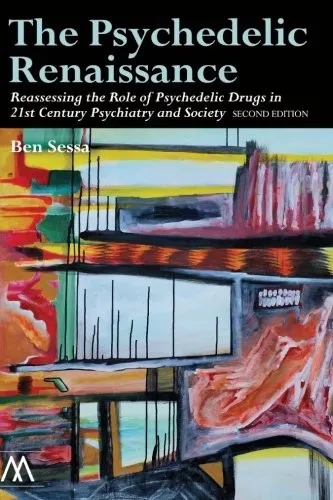
The Psychedelic Renaissance
Ben Sessa (2017)
A psychiatrist and clinical researcher who has personally conducted MDMA and psilocybin therapy trials provides a thorough overview of psychedelic science, history, pharmacology, and clinical potential. Extensively revised for the 2017 second edition, the book surveys every major psychedelic substance and its evidence base for treating psychiatric disorders.
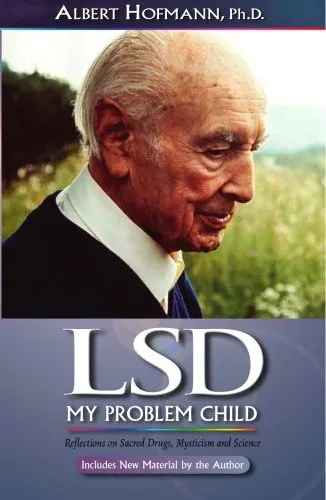
LSD: My Problem Child
Albert Hofmann (1979)
The firsthand account by the chemist who accidentally discovered LSD's psychoactive properties in 1943 — from the legendary "Bicycle Day" first trip to decades of promising psychiatric research and ultimate prohibition. Hofmann also documents his isolation of psilocybin from Mexican sacred mushrooms and his correspondence with Huxley, Leary, Wasson, and Jünger.

The Psychedelic Handbook
Rick Strassman (2022)
A comprehensive, evidence-based practical guide covering nine psychedelic substance classes — psilocybin, LSD, DMT/ayahuasca, mescaline, ketamine, MDMA, ibogaine, 5-MeO-DMT, and Salvia divinorum — written by the clinical researcher who conducted the first FDA-approved psychedelic study in a generation. Each chapter addresses pharmacology, therapeutic potential, safe use guidelines, microdosing, and recognition of adverse reactions.