Psychedelic Literacy
What is psychedelic literacy?
Psychedelic literacy is a comprehensive framework of knowledge that enables individuals to engage with psychedelic substances safely, responsibly, and effectively. It encompasses:
- Pharmacological knowledge — understanding how substances work in the body and brain
- Historical context — knowing the history of psychedelic use, research, and prohibition
- Legal awareness — understanding the laws and regulations in your jurisdiction
- Risk assessment — ability to evaluate personal risk factors and contraindications
- Critical thinking — distinguishing between evidence, anecdote, and hype
- Harm reduction — practical knowledge for minimizing risks
- Cultural sensitivity — understanding and respecting indigenous and traditional psychedelic use
- Integration skills — knowing how to process and apply psychedelic experiences
Psychedelic literacy is not about promoting or discouraging use — it's about ensuring that anyone who chooses to engage with these substances does so with full information and practical skills.
Why it matters for microdosing
Psychedelic literacy is the foundation of responsible microdosing:
- Informed consent — you can only truly consent to microdosing if you understand the substances, risks, benefits, and legal implications
- Safety — literate microdosers make safer choices about dosing, substance interactions, and contraindications
- Effectiveness — understanding mechanisms, protocols, and integration practices leads to better outcomes
- Community health — literate community members can provide better peer support and challenge misinformation
- Advocacy — informed individuals contribute to more nuanced public discourse about psychedelic policy
Core curriculum for microdosing literacy:
- Substance knowledge — what you're taking, how it works, what it does
- Safety fundamentals — contraindications, interactions, harm reduction
- Protocol understanding — dosing, scheduling, titration
- Self-assessment — journaling, baseline establishment, honest evaluation
- Research literacy — understanding clinical trials, placebo effects, evidence quality
- Legal knowledge — laws in your jurisdiction, risk assessment
- Community engagement — finding reliable sources, contributing responsibly
How it works in practice
- Read widely — books, peer-reviewed research, reputable websites; not just community forums
- Think critically — question claims, seek evidence, consider alternative explanations
- Start with safety — before anything else, understand contraindications and interactions
- Learn continuously — the field is evolving rapidly; stay updated with new research
- Share knowledge — help others develop literacy; the community is only as safe as its least-informed members
Recommended foundations:
- How to Change Your Mind — Michael Pollan
- The Psychedelic Explorer's Guide — James Fadiman
- MAPS (Multidisciplinary Association for Psychedelic Studies)
- Psychedelic Science Review
- Third Wave (microdosing-specific resource)
What to watch out for
- Dunning-Kruger effect — a little knowledge can create false confidence; stay humble about what you don't know
- Source quality — not all information is equally reliable; peer-reviewed research > blog posts > social media
- Confirmation bias — seek out information that challenges your beliefs, not just information that confirms them
- Information gatekeeping — be wary of individuals or organizations that claim to be the sole authority on psychedelic knowledge
- Literacy ≠ expertise — being literate means knowing enough to make informed decisions and knowing when to seek expert guidance
Related Terms
Recommended Books
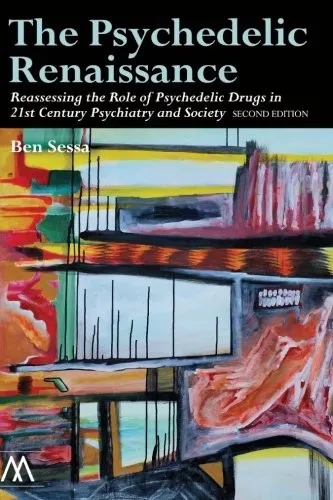
The Psychedelic Renaissance
Ben Sessa (2017)
A psychiatrist and clinical researcher who has personally conducted MDMA and psilocybin therapy trials provides a thorough overview of psychedelic science, history, pharmacology, and clinical potential. Extensively revised for the 2017 second edition, the book surveys every major psychedelic substance and its evidence base for treating psychiatric disorders.
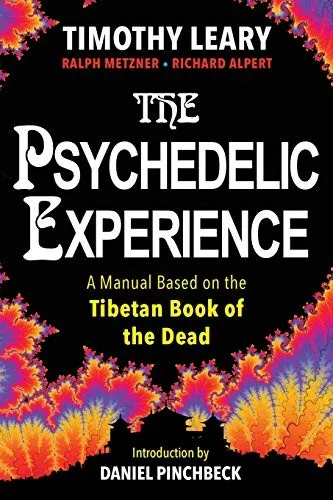
The Psychedelic Experience
Timothy Leary, Ralph Metzner, Richard Alpert (1964)
The foundational manual for navigating psychedelic experiences, reinterpreting the Tibetan Book of the Dead as a framework for ego dissolution, bardo states, and re-entry during LSD and psilocybin sessions. Written by the three Harvard researchers who launched the modern psychedelic movement, it established the concepts of preparation, set and setting, and guided sessions that remain central to all psychedelic practice today.
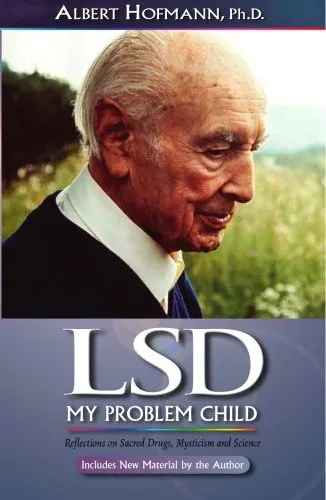
LSD: My Problem Child
Albert Hofmann (1979)
The firsthand account by the chemist who accidentally discovered LSD's psychoactive properties in 1943 — from the legendary "Bicycle Day" first trip to decades of promising psychiatric research and ultimate prohibition. Hofmann also documents his isolation of psilocybin from Mexican sacred mushrooms and his correspondence with Huxley, Leary, Wasson, and Jünger.
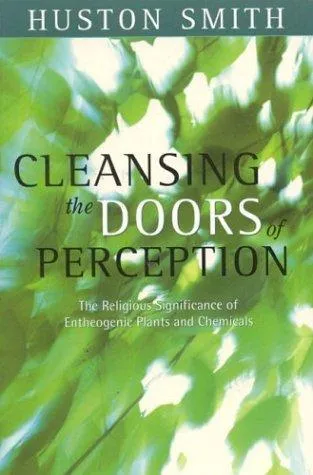
Cleansing the Doors of Perception
Huston Smith (2000)
The definitive scholarly treatment of whether psychedelic experiences qualify as authentically religious, written by the 20th century's foremost authority on comparative religion. Drawing on his personal participation in the 1962 Good Friday Experiment, his friendship with Aldous Huxley, and four decades of studying the world's spiritual traditions, Smith concludes that entheogens can trigger genuine mystical experiences but cannot by themselves produce religious lives — integration is where the real work begins.
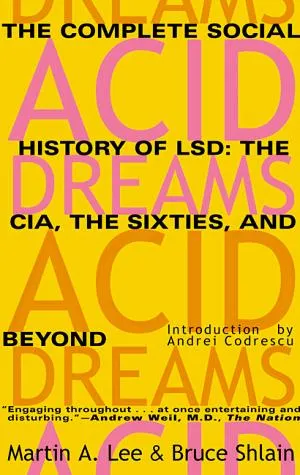
Acid Dreams
Martin A. Lee, Bruce Shlain (1985)
The definitive social history of LSD, tracing the substance from its synthesis by Albert Hofmann in 1938 through CIA mind-control experiments (MK-Ultra), the Harvard Psilocybin Project, the counterculture explosion of the 1960s, and the backlash that led to prohibition. Drawn partly from declassified government files, the book reveals how LSD shaped — and was shaped by — some of the most turbulent decades of American history.
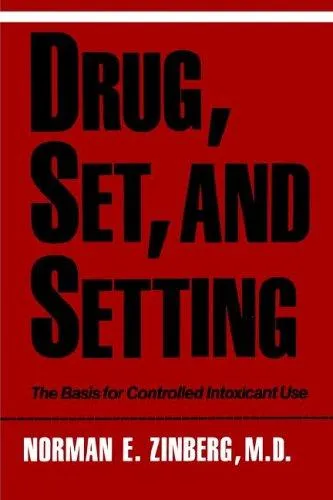
Drug, Set, and Setting
Norman E. Zinberg (1984)
The foundational academic text on controlled drug use, written by Harvard psychiatrist Norman Zinberg, which established the theoretical framework that drug outcomes are determined not just by pharmacology ("drug") but equally by the user's mindset ("set") and their social and physical environment ("setting"). This book provided the scientific basis for the harm-reduction approach that now underpins all responsible psychedelic practice, including microdosing protocols.