Controlled Substance
What is a controlled substance?
A controlled substance is any drug or chemical whose production, possession, distribution, and use is regulated by law. Most countries maintain scheduling systems that categorize substances based on:
- Medical utility — whether the substance has recognized therapeutic applications
- Abuse potential — the likelihood of the substance being misused
- Safety profile — the risk of physical or psychological harm
- Dependence liability — the potential for creating addiction
US Scheduling System (DEA):
| Schedule | Description | Examples |
|---|---|---|
| I | No accepted medical use, high abuse potential | Psilocybin, LSD, MDMA, Cannabis |
| II | High abuse potential, accepted medical use | Cocaine, Methamphetamine, Fentanyl |
| III | Moderate abuse potential | Ketamine, Testosterone |
| IV | Lower abuse potential | Benzodiazepines, Modafinil |
| V | Lowest abuse potential | Some cough medicines |
Classical psychedelics (psilocybin, LSD, DMT, mescaline) are currently Schedule I in the US and carry similar classifications in most countries.
Why it matters for microdosing
Understanding controlled substance laws is essential for informed decision-making:
- Legal risk — possession of Schedule I substances carries significant criminal penalties in most jurisdictions
- Historical context — psychedelics were made Schedule I in the 1970s largely for political reasons, not based on scientific evidence of harm
- Rescheduling potential — growing clinical evidence may lead to rescheduling; MDMA and psilocybin are both in advanced clinical trials
- Research barriers — Schedule I classification creates significant bureaucratic and financial barriers to scientific research
- Informed consent — anyone choosing to microdose should fully understand the legal implications in their jurisdiction
What to watch out for
- Jurisdiction matters — scheduling varies by country and sometimes by state/province; always check local laws
- International travel — carrying controlled substances across borders can result in severe penalties
- Analogue laws — some jurisdictions have "analogue acts" that extend scheduling to chemically similar compounds
- Evolving laws — the legal landscape is changing rapidly; stay informed about developments in your area
- Legal ≠ safe, illegal ≠ dangerous — legal classification is a political/administrative decision, not a pure measure of risk
Related Terms
Recommended Books
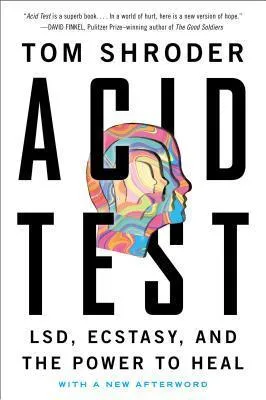
Acid Test
Tom Shroder (2014)
Award-winning Washington Post journalist Tom Shroder tells the story of the psychedelic renaissance through three interconnected lives: Rick Doblin, founder of MAPS; Michael Mithoefer, the psychiatrist pioneering MDMA-assisted therapy; and Nick Blackston, a Marine suffering from severe PTSD. The book traces the arc from LSD's discovery through prohibition to the modern clinical trials that are bringing psychedelics back into medicine.
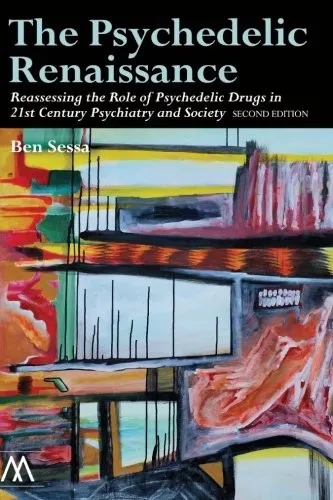
The Psychedelic Renaissance
Ben Sessa (2017)
A psychiatrist and clinical researcher who has personally conducted MDMA and psilocybin therapy trials provides a thorough overview of psychedelic science, history, pharmacology, and clinical potential. Extensively revised for the 2017 second edition, the book surveys every major psychedelic substance and its evidence base for treating psychiatric disorders.
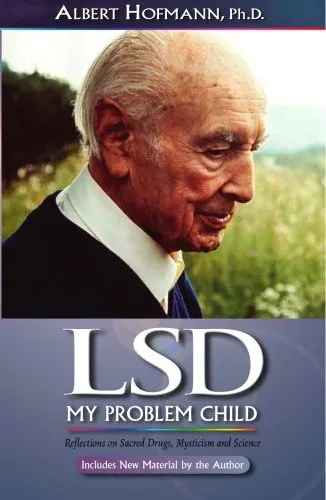
LSD: My Problem Child
Albert Hofmann (1979)
The firsthand account by the chemist who accidentally discovered LSD's psychoactive properties in 1943 — from the legendary "Bicycle Day" first trip to decades of promising psychiatric research and ultimate prohibition. Hofmann also documents his isolation of psilocybin from Mexican sacred mushrooms and his correspondence with Huxley, Leary, Wasson, and Jünger.

PiHKAL: A Chemical Love Story
Alexander Shulgin, Ann Shulgin (1991)
The most iconic book in psychedelic chemistry — part intimate love story memoir, part encyclopedic reference documenting 179 phenethylamine compounds with synthesis routes, precise dosage ranges, durations, and first-person experience reports. Written by Alexander "Sasha" Shulgin, who personally synthesized and bioassayed over 230 novel psychoactive compounds including popularizing MDMA for psychotherapy.
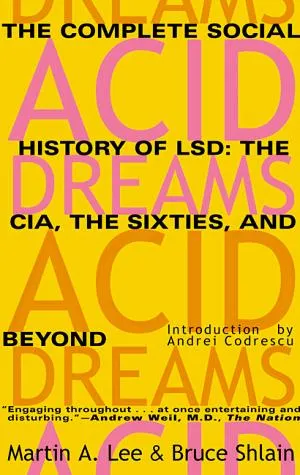
Acid Dreams
Martin A. Lee, Bruce Shlain (1985)
The definitive social history of LSD, tracing the substance from its synthesis by Albert Hofmann in 1938 through CIA mind-control experiments (MK-Ultra), the Harvard Psilocybin Project, the counterculture explosion of the 1960s, and the backlash that led to prohibition. Drawn partly from declassified government files, the book reveals how LSD shaped — and was shaped by — some of the most turbulent decades of American history.
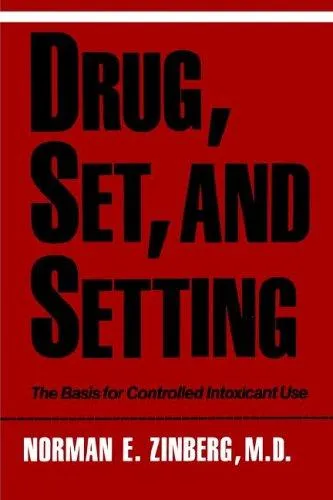
Drug, Set, and Setting
Norman E. Zinberg (1984)
The foundational academic text on controlled drug use, written by Harvard psychiatrist Norman Zinberg, which established the theoretical framework that drug outcomes are determined not just by pharmacology ("drug") but equally by the user's mindset ("set") and their social and physical environment ("setting"). This book provided the scientific basis for the harm-reduction approach that now underpins all responsible psychedelic practice, including microdosing protocols.