Cleansing the Doors of Perception
The Religious Significance of Entheogenic Plants and Chemicals
Our Review
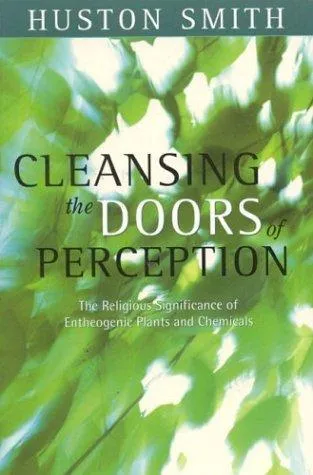
Cleansing the Doors of Perception collects Huston Smith's essays spanning roughly 40 years on the central question of entheogen use: can chemically-induced mystical experiences be considered authentic? Smith — professor at MIT, Washington University, Syracuse, and UC Berkeley, subject of a five-part PBS Bill Moyers special, and arguably the most respected religious studies scholar of the 20th century — brings unmatched depth of knowledge across Hinduism, Buddhism, Islam, Christianity, and indigenous traditions to this question. His personal experience includes participation in the Harvard Psilocybin Project's Good Friday Experiment (1962), which remains one of the most cited studies in psychedelic research.
Smith's answer is nuanced and deeply valuable for integration practice: yes, entheogens can catalyze genuine mystical experiences that are phenomenologically indistinguishable from spontaneous ones — but the experience alone does not constitute spiritual growth. The hard work of transforming a peak experience into a changed life requires ongoing practice, community, ethical commitment, and integration. This insight directly challenges both the dismissive "drugs can't produce real spirituality" camp and the naive "one trip will enlighten you" camp. The limitation is the book's academic register — it is scholarly and philosophical rather than practical, and at 173 pages it is more of an extended essay collection than a comprehensive treatment.
For microdosing practitioners, Smith's framework is particularly relevant because it addresses the "so what?" question that many microdosers eventually face: subtle shifts in consciousness, increased openness, and moments of connection are valuable — but what do they mean, and how do they connect to a larger purpose? Smith provides the intellectual and spiritual framework for taking psychedelic insights seriously as part of a meaningful life, without either inflating them into unearned enlightenment or dismissing them as mere chemistry.
Key Takeaways
- ✓ Chemically-induced mystical experiences are phenomenologically indistinguishable from spontaneous ones — the trigger does not determine the authenticity or value of the experience itself
- ✓ Psychedelic experiences can be spiritually significant, but they are not sufficient for spiritual growth — they are catalysts that require integration through ongoing practice, reflection, and ethical engagement to produce lasting transformation
- ✓ The world's major religious traditions have long histories of entheogen use (soma in Vedic tradition, haoma in Zoroastrianism, peyote in Native American Church) — modern psychedelic use participates in a tradition that is older than recorded history
- ✓ The Good Friday Experiment (1962) demonstrated that psilocybin in a religious setting produced mystical experiences that participants rated as among the most meaningful of their lives — a finding confirmed by 25-year follow-up and replicated by Johns Hopkins research
- ✓ The integration of psychedelic insights into daily life requires the same disciplines that all contemplative traditions teach — attention, intention, ethical commitment, community, and humility
Who Should Read This
Readers who approach psychedelics with spiritual or philosophical questions rather than (or in addition to) therapeutic or performance goals. Especially valuable for those who have had meaningful psychedelic experiences and want a rigorous intellectual framework for understanding their significance, and for anyone interested in the intersection of psychedelic science and religious studies.
Available Editions
Related Content
Related Substances
Related Terms
Important Legal Notice
⚠️ Personal Responsibility
You use this application entirely at your own risk and responsibility. MicrodosingDiary is only a tool for recording personal experiences.
🚫 Not a Medical Service
This application IS NOT a medical tool, does not provide medical advice, does not diagnose or treat any conditions. Always consult a qualified physician.
⚖️ Legislation and Laws
Many substances used for microdosing are illegal in many countries. Users are fully responsible for complying with local laws. The application does not support or promote illegal activity.
❌ No Guarantees
We provide no guarantees regarding results, safety or efficacy of microdosing. All information is for informational purposes only.
🔞 Age Restriction
Application is intended only for persons over 18 years of age. By using the application you confirm that you are an adult.
🔒 Data Privacy
Your diary entries are private and encrypted. The application is for personal use. Public-page analytics is described in Privacy and Terms.
By using this application you accept all the above risks and waive any claims against the application operator.