This Is Your Mind on Plants
Eine Kulturgeschichte psychoaktiver Pflanzen
Our Review
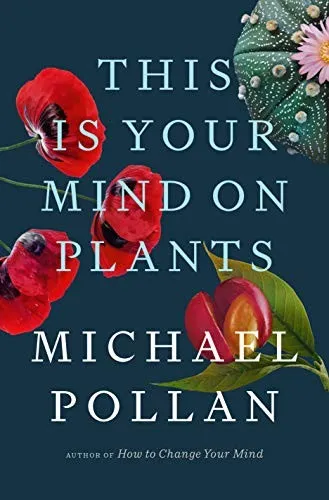
After the sweeping survey of How to Change Your Mind, Michael Pollan narrows his lens to three plants and three very different relationships with the law. The opium section revisits a 1997 magazine piece he wrote about growing poppies in his garden, now published with the passages his lawyers made him cut at the height of the drug war. The caffeine chapter is an experiment in abstinence: Pollan gives up coffee and tea for three months to find out what the world's most widely used psychoactive drug actually does, and discovers he can barely think without it. The mescaline section takes him from San Pedro cactus to the Native American Church, where peyote is a legally protected sacrament — and where he is politely told that a white journalist's curiosity is not a good enough reason to attend.
Pollan's gift is for making a policy argument feel like a personal story. The book's underlying question — why we criminalise one plant, celebrate another and treat a third as sacred, when all three simply alter consciousness — is never preached, only shown. The mescaline chapter is the strongest for this audience, both for its careful account of the cactus's pharmacology and for its honest reckoning with the ethics of outsiders using an indigenous medicine. The limitations are structural: this is three long essays rather than one argument, the psychedelic content is a third of the book, and readers who want more on psilocybin or LSD should go back to his earlier work.
For microdosing practitioners the most useful part may be the caffeine chapter. Pollan's account of dependence, tolerance and withdrawal from a drug most people never think of as a drug is a sharp reminder that sub-perceptual does not mean inconsequential, and that the honest way to know what a substance does is to stop taking it and pay attention. His treatment of mescaline also gives the substance a cultural depth that the usual dosage tables lack, and his wrestling with who has the right to use a plant is a question anyone working with traditional medicines should sit with.
Key Takeaways
- ✓ The legal status of a psychoactive plant has far more to do with history, culture and politics than with its pharmacology or its risks
- ✓ Caffeine is a genuine psychoactive drug with dependence, tolerance and withdrawal — and the only way to know what it does to you is to stop taking it for a while
- ✓ Mescaline cacti carry deep cultural meaning for the peoples who use them, and outsider curiosity raises real ethical questions about appropriation and scarcity
- ✓ Changing your consciousness with plants is a universal human practice; which changes a society permits says more about the society than about the plants
- ✓ Pollan's own experiments show the value of approaching any substance as a careful, self-observing experiment rather than a habit
Who Should Read This
Readers who enjoyed How to Change Your Mind and want Pollan's next step, anyone interested in mescaline and its cultural context, and people who have never thought about their daily coffee as a drug. Also a good starting point for readers more interested in drug policy and culture than in neuroscience.
Available Editions
Related Content
Related Substances
Related Terms
Important Legal Notice
⚠️ Personal Responsibility
You use this application entirely at your own risk and responsibility. MicrodosingDiary is only a tool for recording personal experiences.
🚫 Not a Medical Service
This application IS NOT a medical tool, does not provide medical advice, does not diagnose or treat any conditions. Always consult a qualified physician.
⚖️ Legislation and Laws
Many substances used for microdosing are illegal in many countries. Users are fully responsible for complying with local laws. The application does not support or promote illegal activity.
❌ No Guarantees
We provide no guarantees regarding results, safety or efficacy of microdosing. All information is for informational purposes only.
🔞 Age Restriction
Application is intended only for persons over 18 years of age. By using the application you confirm that you are an adult.
🔒 Data Privacy
Your diary entries are private and encrypted. The application is for personal use. Public-page analytics is described in Privacy and Terms.
By using this application you accept all the above risks and waive any claims against the application operator.