Threshold Dose
What is a threshold dose?
The threshold dose is the lowest amount of a psychedelic substance that produces detectable effects — the point where you cross from "I feel nothing" to "I think I feel something." It's the dividing line between a truly sub-perceptual microdose and a dose that begins to make its presence known.
At the threshold, effects are subtle and ambiguous:
- A slight shift in color saturation
- Mild physical sensations (tingling, warmth, lightness)
- A barely perceptible change in headspace
- Enhanced sensory awareness that you might attribute to imagination
Threshold dose ranges
Threshold doses vary significantly between individuals due to body weight, metabolism, sensitivity, and recent tolerance. Approximate ranges:
| Substance | Threshold dose |
|---|---|
| Psilocybin mushrooms | 0.2–0.5 g dried |
| LSD | 15–25 µg |
| Mescaline | 50–100 mg |
| DMT (oral, with MAOI) | 15–30 mg |
Important: These are rough guides. Individual variation is enormous.
Why it matters for microdosing
Microdoses are calibrated at or just below the threshold dose. Understanding where your personal threshold lies is essential for effective microdosing:
- Too far below threshold → You may experience no benefit beyond placebo
- At threshold → Subtle effects present; some find this optimal, others find it distracting
- Above threshold → Perceptual effects appear; this is no longer a microdose
The goal of titration is to systematically find your personal threshold and then dial back slightly to find the sub-perceptual sweet spot.
How to identify your threshold
- Start well below — Begin with a dose that's clearly too low (e.g., 0.05 g mushrooms)
- Increase incrementally — Add small amounts each dosing session (0.025–0.05 g)
- Note the shift — When you first notice any effect — however faint — you've found your threshold
- Set your microdose below it — Your working microdose should be slightly under this amount
- Re-calibrate with new batches — Potency varies, so repeat this process with each new supply
Factors that shift your threshold
- Tolerance — Recent psychedelic use raises your threshold significantly
- Body weight and metabolism — Larger individuals may need higher doses
- Stomach contents — Taking a dose on an empty stomach lowers the threshold
- Sleep and stress — Poor sleep or high stress can increase sensitivity
- Medications — SSRIs raise the threshold; MAOIs dramatically lower it
- Individual genetics — Variations in liver enzymes (CYP450) affect metabolism
Related Terms
Recommended Books
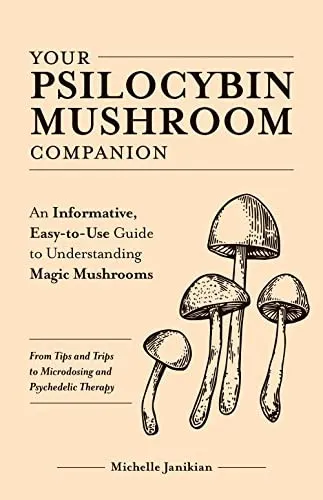
Your Psilocybin Mushroom Companion
Michelle Janikian (2019)
A comprehensive, beginner-friendly guide to psilocybin mushrooms covering everything from planning safe trips and training guides to microdosing protocols and psychedelic therapy. Journalist Michelle Janikian pairs the latest research with practical, step-by-step advice for both newcomers and experienced users, emphasizing harm reduction throughout.

PiHKAL: A Chemical Love Story
Alexander Shulgin, Ann Shulgin (1991)
The most iconic book in psychedelic chemistry — part intimate love story memoir, part encyclopedic reference documenting 179 phenethylamine compounds with synthesis routes, precise dosage ranges, durations, and first-person experience reports. Written by Alexander "Sasha" Shulgin, who personally synthesized and bioassayed over 230 novel psychoactive compounds including popularizing MDMA for psychotherapy.
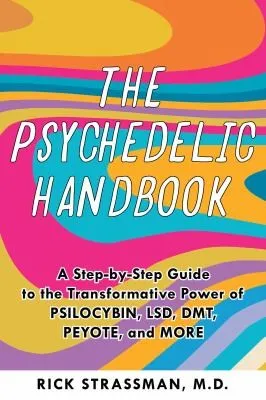
The Psychedelic Handbook
Rick Strassman (2022)
A comprehensive, evidence-based practical guide covering nine psychedelic substance classes — psilocybin, LSD, DMT/ayahuasca, mescaline, ketamine, MDMA, ibogaine, 5-MeO-DMT, and Salvia divinorum — written by the clinical researcher who conducted the first FDA-approved psychedelic study in a generation. Each chapter addresses pharmacology, therapeutic potential, safe use guidelines, microdosing, and recognition of adverse reactions.
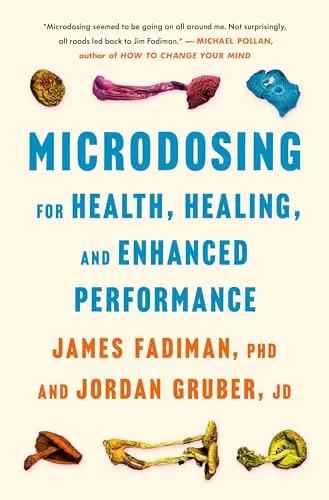
Microdosing for Health, Healing, and Enhanced Performance
James Fadiman, Jordan Gruber (2025)
The long-awaited follow-up to The Psychedelic Explorer's Guide, written by the man whose name is on the most widely used microdosing protocol. Fadiman and Gruber distil over a decade of self-reports from thousands of microdosers, alongside the latest clinical research, into the most complete book on the practice to date.