Mindset
What is mindset in the context of microdosing?
Mindset refers to the entire constellation of your psychological state at the time you take a microdose: your mood, beliefs, fears, hopes, stress level, emotional baggage, and general outlook on life. It's the internal landscape you bring to the experience.
Unlike intention (which is deliberately chosen), mindset is often partially unconscious. You might set an intention to "be more creative today" while carrying an underlying anxiety about a work deadline that colors your entire experience.
This is why self-awareness is a core skill for microdosers. The better you understand your own mindset, the better you can work with it — rather than being blindsided by it.
Why mindset matters
Psychedelics — even at microdose levels — appear to act as amplifiers of existing mental states. This is sometimes called the "amplification hypothesis":
- Positive mindset + microdose → enhanced positivity, openness, flow
- Anxious mindset + microdose → potentially heightened anxiety, overthinking
- Neutral mindset + microdose → subtle enhancement, often the most useful for objective tracking
- Depressed mindset + microdose → mixed results; sometimes relief, sometimes intensification
This amplification effect is why set and setting is considered the most important concept in psychedelic use. The substance doesn't create the experience from nothing — it works with what's already there.
Components of mindset
Emotional state
How you feel right now: calm, anxious, excited, sad, numb, hopeful, frustrated. Emotions are the most immediate and obvious component of mindset.
Beliefs and expectations
What you believe microdosing will do — or won't do — for you. Research shows that expectancy effects can be as powerful as pharmacological effects at microdose levels.
Psychological history
Your mental health background, attachment style, trauma history, and personality traits. These form the deeper layers of your mindset that don't change day to day.
Physical state
Mindset isn't purely mental. Sleep quality, nutrition, hydration, exercise, and physical health all influence your psychological state. A sleep-deprived mindset is fundamentally different from a well-rested one.
Life context
Major life events — relationship changes, job stress, grief, celebration — create a backdrop that colors everything. Microdosing during a major life upheaval is a different experience than microdosing during a stable period.
How to assess and optimize your mindset
Morning check-in (2 minutes)
Before each dose, ask yourself:
- How do I feel emotionally? Rate 1–10 and name the dominant emotion
- How did I sleep? Quality and duration
- What's on my mind? Top 1–2 concerns or excitements
- How's my body? Any tension, pain, fatigue, or energy?
- Am I in a good place to microdose today? Honest yes/no
When to skip a dose
Consider skipping your on-day if:
- You're in acute emotional distress (panic, rage, deep grief)
- You've had less than 5 hours of sleep
- You're physically ill
- You have a high-stakes, high-pressure event (first dose days only)
- Something feels "off" and you can't identify why — trust your gut
Mindset optimization strategies
- Meditation or breathwork before dosing (even 5 minutes helps)
- Physical movement — a short walk or stretch shifts your state
- Journaling — writing out your current state creates clarity
- Music — your sonic environment shapes your mindset
- Social connection — a brief positive interaction can shift everything
- Nature exposure — even looking at trees through a window helps
Mindset vs. intention
| Mindset | Intention | |
|---|---|---|
| Nature | Largely unconscious | Deliberately chosen |
| Stability | Changes moment to moment | Set once per session |
| Control | Partially controllable | Fully controllable |
| Scope | Everything you bring to the experience | A specific focus or direction |
| Function | The soil | The seed |
Both matter. Intention works best when planted in fertile mindset soil.
Related Terms
Recommended Books
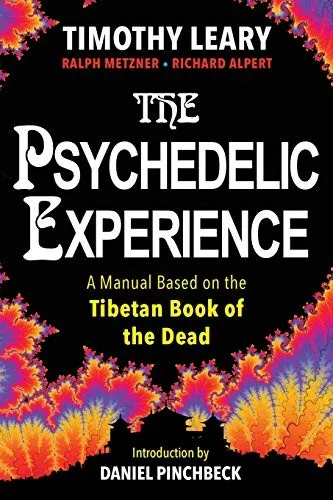
The Psychedelic Experience
Timothy Leary, Ralph Metzner, Richard Alpert (1964)
The foundational manual for navigating psychedelic experiences, reinterpreting the Tibetan Book of the Dead as a framework for ego dissolution, bardo states, and re-entry during LSD and psilocybin sessions. Written by the three Harvard researchers who launched the modern psychedelic movement, it established the concepts of preparation, set and setting, and guided sessions that remain central to all psychedelic practice today.

The Brotherhood of the Screaming Abyss
Dennis McKenna (2012)
Dennis McKenna's memoir of growing up with his brother Terence McKenna and their legendary 1971 expedition to La Chorrera, Colombia, where experiments with psilocybin mushrooms and ayahuasca produced experiences so extreme they challenged both brothers' understanding of reality. Equal parts love story, adventure narrative, and philosophical meditation on the nature of consciousness.
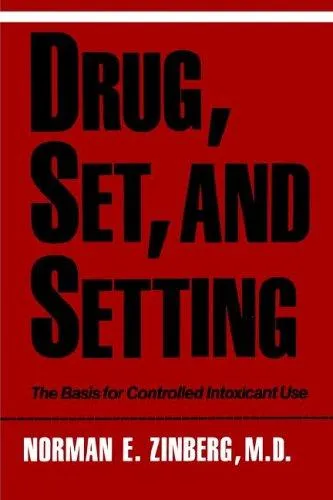
Drug, Set, and Setting
Norman E. Zinberg (1984)
The foundational academic text on controlled drug use, written by Harvard psychiatrist Norman Zinberg, which established the theoretical framework that drug outcomes are determined not just by pharmacology ("drug") but equally by the user's mindset ("set") and their social and physical environment ("setting"). This book provided the scientific basis for the harm-reduction approach that now underpins all responsible psychedelic practice, including microdosing protocols.