Dose-Response Curve
What is a dose-response curve?
A dose-response curve is a fundamental concept in pharmacology that maps the relationship between how much of a substance you take (the dose) and how strong the resulting effect is (the response). It's typically visualized as a graph with dose on the x-axis and effect magnitude on the y-axis.
For most substances, the curve follows a characteristic sigmoid (S-shaped) pattern:
- No-effect range — doses too low to produce any detectable effect
- Threshold — the lowest dose that produces a barely detectable effect
- Linear range — where increasing the dose produces proportionally increasing effects
- Plateau — where further increases produce diminishing additional effects
- Ceiling/Toxicity — where maximum effect is reached or adverse effects begin
Why it matters for microdosing
Understanding the dose-response curve helps microdosers navigate the narrow window between "too little to matter" and "too much to function normally."
The microdosing sweet spot
Microdosing operates in the lowest portion of the dose-response curve — between the no-effect zone and the threshold. The goal is to find the highest point on the curve that still remains sub-perceptual:
Effect
  ↑
  |                          ___________  ← Ceiling
  |                    _____/
  |                ___/
  |            ___/      ← Full psychedelic range
  |         __/
  |       _/
  |     _/           ← Threshold (barely noticeable)
  |   _/
  | _/ ← MICRODOSE RANGE (sub-perceptual)
  |/
  +----------------------------------------→ Dose
Individual curves vary dramatically
The dose-response curve is not universal. Your personal curve is shaped by:
- Genetics — receptor density, enzyme activity
- Body weight — affects distribution
- Tolerance — shifts the entire curve to the right
- Medications — SSRIs flatten the curve; MAOIs steepen it
- Substance potency — varies between batches
This is why titration (gradually finding your ideal dose) is essential — you can't simply copy someone else's dose.
Key concepts from dose-response pharmacology
Potency vs. efficacy
- Potency = how much substance is needed to produce an effect (position on x-axis)
- Efficacy = the maximum effect a substance can produce (height of the curve)
LSD is more potent than psilocybin (effective in micrograms vs. milligrams), but both have similar efficacy at producing psychedelic effects.
ED50 (median effective dose)
The dose at which 50% of the maximum effect is observed. In microdosing, you're operating well below the ED50.
Therapeutic index
The ratio between the dose that produces therapeutic effects and the dose that produces unwanted effects. Psychedelics have a remarkably high therapeutic index — the lethal dose is hundreds to thousands of times higher than the active dose.
Practical implications for microdosers
1. Small changes matter
In the low end of the curve, small dose adjustments (0.025 g mushrooms, 2.5 µg LSD) can produce noticeable differences in effects. This is why precision dosing methods like volumetric dosing are important.
2. The curve shifts
Your personal dose-response curve is not static:
- Tolerance shifts it right (you need more for the same effect)
- Sensitization can shift it left (you need less)
- New batches may have different potency (effectively shifting the curve)
3. Non-linear effects
Don't assume that doubling the dose doubles the effect. The dose-response relationship is non-linear, especially in the ranges relevant to microdosing.
4. U-shaped responses
Some research suggests that certain microdosing effects may follow a U-shaped or inverted-U curve — beneficial at low doses, less beneficial at slightly higher doses, and beneficial again at full doses. This is sometimes called hormesis.
Related Terms
Recommended Books
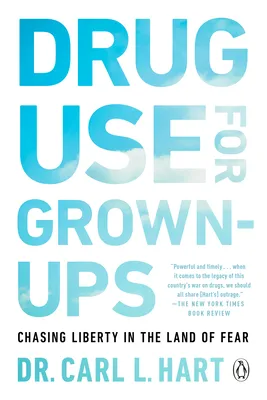
Drug Use for Grown-Ups
Carl L. Hart (2021)
Columbia University professor Carl Hart argues from decades of pharmacological research that the criminalization of drugs — not drugs themselves — causes the greatest harm. A provocative, evidence-based case for responsible adult drug use and rational drug policy.
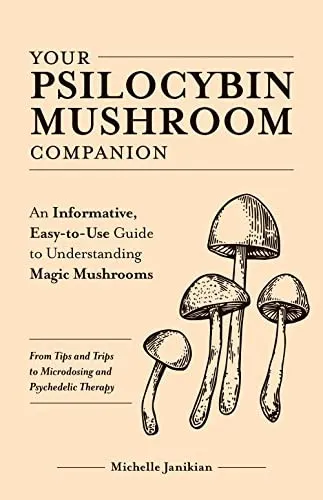
Your Psilocybin Mushroom Companion
Michelle Janikian (2019)
A comprehensive, beginner-friendly guide to psilocybin mushrooms covering everything from planning safe trips and training guides to microdosing protocols and psychedelic therapy. Journalist Michelle Janikian pairs the latest research with practical, step-by-step advice for both newcomers and experienced users, emphasizing harm reduction throughout.

PiHKAL: A Chemical Love Story
Alexander Shulgin, Ann Shulgin (1991)
The most iconic book in psychedelic chemistry — part intimate love story memoir, part encyclopedic reference documenting 179 phenethylamine compounds with synthesis routes, precise dosage ranges, durations, and first-person experience reports. Written by Alexander "Sasha" Shulgin, who personally synthesized and bioassayed over 230 novel psychoactive compounds including popularizing MDMA for psychotherapy.
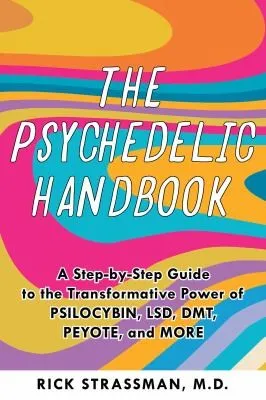
The Psychedelic Handbook
Rick Strassman (2022)
A comprehensive, evidence-based practical guide covering nine psychedelic substance classes — psilocybin, LSD, DMT/ayahuasca, mescaline, ketamine, MDMA, ibogaine, 5-MeO-DMT, and Salvia divinorum — written by the clinical researcher who conducted the first FDA-approved psychedelic study in a generation. Each chapter addresses pharmacology, therapeutic potential, safe use guidelines, microdosing, and recognition of adverse reactions.
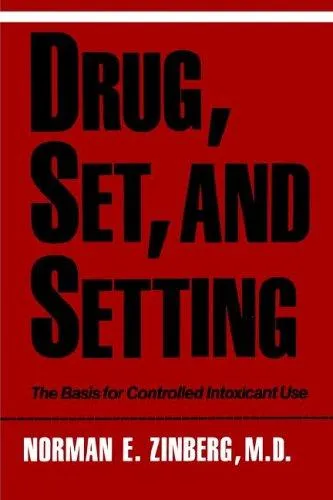
Drug, Set, and Setting
Norman E. Zinberg (1984)
The foundational academic text on controlled drug use, written by Harvard psychiatrist Norman Zinberg, which established the theoretical framework that drug outcomes are determined not just by pharmacology ("drug") but equally by the user's mindset ("set") and their social and physical environment ("setting"). This book provided the scientific basis for the harm-reduction approach that now underpins all responsible psychedelic practice, including microdosing protocols.