Dose Log
What is a dose log?
A dose log is the quantitative backbone of your microdosing practice — a precise, consistent record of every dose you take along with relevant contextual data. If your journal is the qualitative narrative, your dose log is the spreadsheet.
A complete dose log entry includes:
- Date and day of week
- Time of dose
- Substance (psilocybin, LSD, etc.)
- Exact amount (0.12 g, 10 µg, etc.)
- Batch identifier (since potency varies between batches)
- Method (capsule, volumetric solution, raw material)
- Protocol day (on-day, transition, off-day)
- Context notes (empty stomach, with food, supplements taken, sleep quality)
Why a dose log is essential
1. Precision enables optimization
The difference between an effective microdose and a too-strong dose can be 0.05 g of mushrooms or 5 µg of LSD. Without precise records, you can't identify your optimal dose.
2. Batch tracking
Natural psychedelic materials (especially mushrooms) have significant potency variation between batches. Logging which batch you're using allows you to adjust doses when you switch to new material.
3. Pattern recognition
Over weeks of logged data, you can identify:
- Which days of the week produce the best outcomes
- How timing affects your experience (7 AM vs. 9 AM)
- Whether food/fasting matters for you
- How different doses correlate with your mood and performance metrics
4. Safety
A dose log is a safety record. If something goes wrong — an unexpectedly strong reaction, a negative interaction — your log provides the information needed to understand what happened.
5. Accountability
Writing down your doses keeps you honest and consistent with your protocol. It's easy to "forget" whether you dosed yesterday. A log eliminates ambiguity.
How to set up your dose log
Minimum viable log
For each dose day, record at minimum:
| Field | Example |
|---|---|
| Date | 2025-03-15 |
| Time | 7:30 AM |
| Substance | Psilocybin (Golden Teacher) |
| Amount | 0.12 g |
| Batch | Batch #3 |
Enhanced log
Add contextual factors that may influence your experience:
| Field | Example |
|---|---|
| Sleep (hours) | 7.5 |
| Sleep quality | 7/10 |
| Stomach | Empty |
| Supplements | Lion's Mane, Omega-3 |
| Caffeine | 1 coffee, 8:30 AM |
| Exercise | 30 min run, morning |
| Stress level | 4/10 |
| Menstrual cycle | Day 14 |
Off-day log
Don't just log dose days. Log off-days too (minus the dose fields). This creates the comparison dataset you need for meaningful analysis.
Tools for dose logging
Spreadsheet (Google Sheets / Excel)
Pros: Fully customizable, easy to analyze with charts and formulas, free
Cons: Requires manual setup, less convenient on mobile
Dedicated app (MicrodosingDiary, etc.)
Pros: Purpose-built interface, reminders, built-in analytics, mobile-friendly
Cons: Less customizable, may require subscription
Paper notebook
Pros: Tactile, no screen required, pairs well with reflective journaling
Cons: Harder to analyze trends, no automatic calculations
Recommendation
Use a digital tool for dose logging (you need the data analysis) and optionally add a paper journal for qualitative reflections (you benefit from the depth).
Analyzing your dose log
Weekly review questions
- Did I follow my protocol consistently?
- How did my metrics compare on on-days vs. off-days?
- Did any contextual factors stand out? (great sleep = great dose day?)
Monthly review questions
- What's my average dose been?
- Has my effective dose drifted up or down? (tolerance check)
- Which batch am I on, and has there been a potency change?
- Are my metrics improving relative to baseline?
Cycle review questions
- What was the optimal dose for this cycle?
- What protocol worked best?
- Should I adjust anything for the next cycle?
Related Terms
Recommended Books
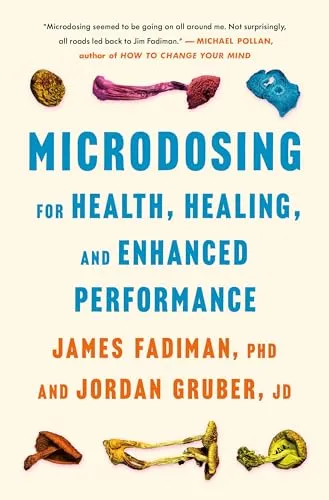
Microdosing for Health, Healing, and Enhanced Performance
James Fadiman, Jordan Gruber (2025)
The long-awaited follow-up to The Psychedelic Explorer's Guide, written by the man whose name is on the most widely used microdosing protocol. Fadiman and Gruber distil over a decade of self-reports from thousands of microdosers, alongside the latest clinical research, into the most complete book on the practice to date.
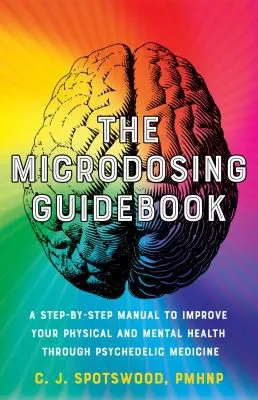
The Microdosing Guidebook
C. J. Spotswood (2022)
A hands-on workbook on microdosing written by a psychiatric nurse practitioner with two decades of clinical experience. Spotswood combines a plain-language summary of the research with worksheets, intention-setting exercises and a guided journal for tracking your own protocol.